

Why do your muscles shake during exercise? the science behind ‘the shakes’
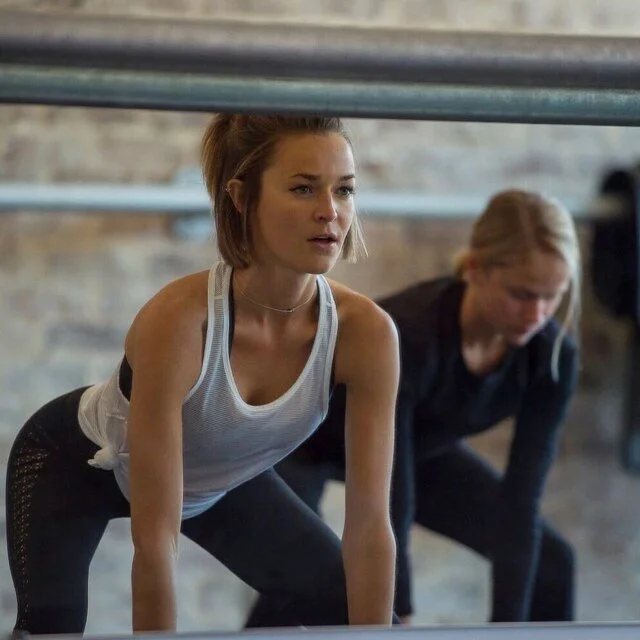
If you've ever held a deep lunge, powered through a set of heel raises or spent a suspiciously long time in a barre position, you'll probably know exactly what we mean by the shakes.
your legs start trembling, your muscles begin to wobble and suddenly you're wondering whether everyone else in the room can see it.
they can.
but here's the good news: muscle shaking during exercise isn't necessarily a sign of weakness. More often, it's simply a sign that your muscles are working hard to produce force, maintain stability and control the movement you're asking them to perform.
whether you're doing Pilates, barre or strength training, shaking can be a normal response to muscle fatigue and increased muscular demand.
so, what's actually happening?
when you perform a slow, controlled movement, your muscles have to work continuously to maintain your position and control your joints.
take a lunge. You're not just moving up and down. Your muscles are working together to balance you, stabilise your joints and produce enough force to keep you in position.
as your muscles fatigue, your nervous system recruits additional motor units, which are groups of muscle fibres controlled by a single motor neuron. This helps maintain the force needed to continue the exercise.
as fatigue increases, maintaining that force and control becomes harder. The result? Those familiar little tremors we call the shakes.
what do your golgi tendon organs have to do with it?
this is where things get particularly clever.
Golgi tendon organs are tiny sensory receptors located where muscles meet tendons. They detect changes in muscle tension and send information to your nervous system, helping your body regulate force and respond to the demands being placed on it.
so while you're concentrating on keeping your knee aligned and wondering why your instructor hasn't let you come out of the position yet, your nervous system is constantly receiving and responding to information about what's happening inside your body.
it's a pretty impressive system.
does shaking mean you're getting stronger?
not necessarily.
the shakes aren't a direct measurement of strength or how effective your workout is. You don't need to shake to have a good workout, and more shaking doesn't automatically mean better results.
what it does tell you is that your neuromuscular system is being challenged.
with consistent, appropriately challenging exercise, your body adapts. Over time, you can become better at producing force, controlling movement and maintaining stability.
that's why progressive overload and consistency matter far more than chasing the shakes.
why are slow movements so good at creating the shakes?
slow, controlled exercises can make muscle fatigue particularly noticeable because your muscles spend longer under tension.
this is one reason Pilates and barre can feel surprisingly intense even when you're using little or no weight.
a small movement doesn't necessarily mean an easy movement.
sometimes making an exercise slower, smaller and more controlled can make it significantly harder.
should you stop when you start shaking?
not automatically.
if you're maintaining good technique and the shaking simply feels like muscular fatigue, it can be a completely normal response to exercise.
but shaking isn't something you should blindly push through. If you're losing control, your technique is breaking down, or you're experiencing pain, dizziness or unusual weakness, it's time to stop or modify the exercise.
good training isn't about pushing through everything. It's about understanding the difference between challenge and warning signs.
the bottom line
the next time your legs start trembling during a lunge, your calves shake during heel raises or your whole body develops its own vibration setting during a Pilates or barre class, don't panic.
your muscles are working hard. Your nervous system is recruiting muscle fibres, coordinating force and helping you maintain stability and control.
the shakes aren't a badge of honour, but they're nothing to be embarrassed about either.
they're simply one of the ways your body tells you that you're being challenged.
so keep your form, listen to your body and, if the shakes arrive?
shake it away.
